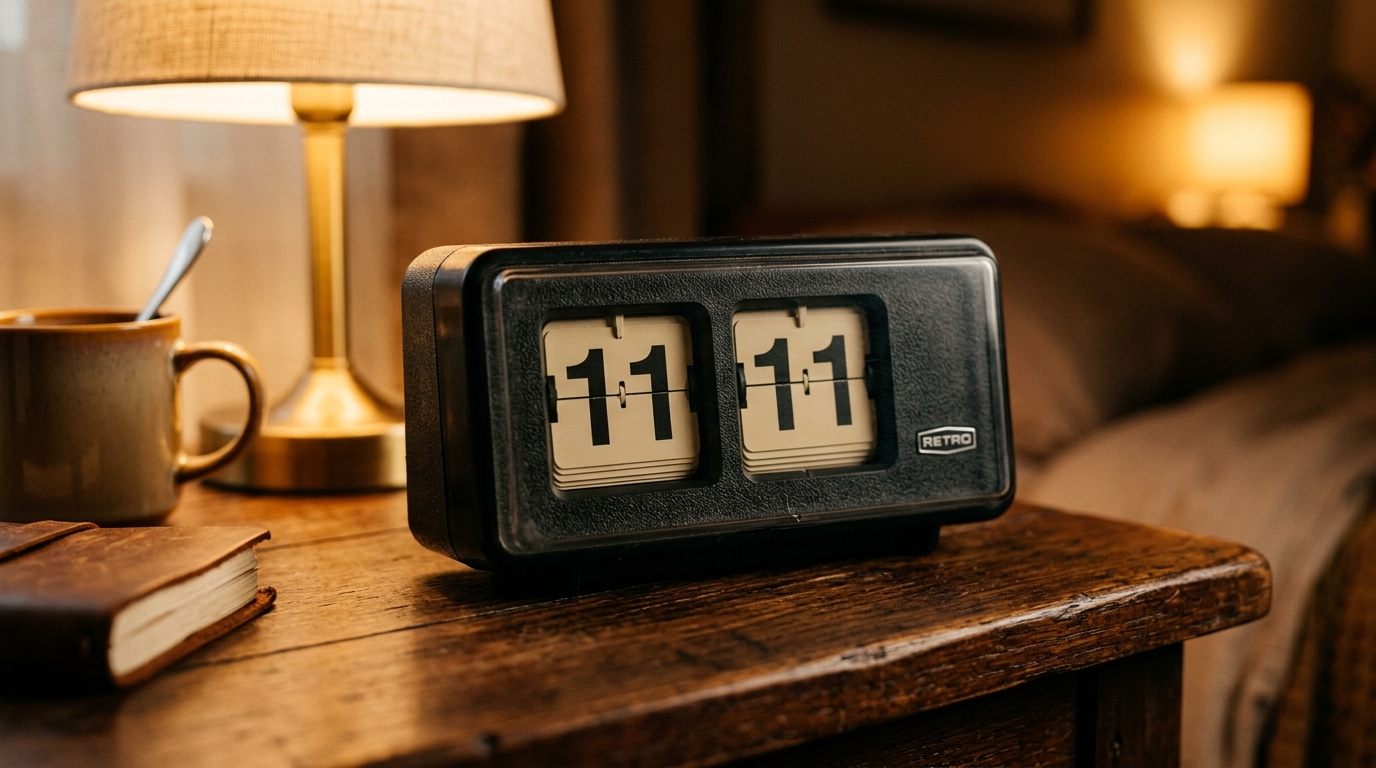
My last blog post went live on October 2, 2014.
I was writing about Dell EqualLogic enterprise storage arrays, phone system debugging, and IT service quirks.
Then life happened.
Almost twelve years, 4,353 days, a few career shifts, a house move, and a new baby later, I looked at this domain and realized it was time to dust off the archive, modernize the stack, and start documenting everything again.
The Tech World Has Changed (And So Has My Workbench)
Looking back at 2014, my homelab was dominated by spinning-disk enterprise SANs, noisy rack servers, and early Arduino experiments.
Fast forward to 2026: - Microcontrollers are tiny supercomputers: We’ve moved from 8-bit 16 MHz ATmega chips to 240 MHz dual-core ESP32-S3 and RISC-V ESP32-C6 microcontrollers with native Wi-Fi 6, Bluetooth 5 LE, and on-die USB Host controllers. - 3D Printing is lightning-fast: Delta 3D printers and custom multi-material feeder units (MMUs) run automated tool changes at 600 mm/s on Klipper. - Home Automation is ambient: Local Home Assistant servers, Zigbee mesh networks, SDR radio receivers sniffing 915 MHz environmental sensors, and zero-cloud local AI inference run 24/7 in the background. - AI as a Systems Co-Engineer: AI pair programming has evolved from simple autocomplete to collaborating on low-level DSP audio pipelines, raw automotive K-Line protocols, and multi-node infrastructure auditing.
I never stopped building, tinkering, or engineering during the gap—I just stopped writing about it.
What’s Coming to the Blog
Over the next few weeks, I’m publishing a series of deep dives into recent hardware, IoT, and firmware projects.
(Note: You’ll notice several project articles backdated to earlier in 2026. I wanted them to live chronologically on the timeline when the breadboards were actually wired and the code was originally flashed).
Here is a preview of what’s landing in the archive:
- The Breeza Acoustic Bottle Monitor: How a failed smart-plug experiment led to using spare I2S MEMS microphones, real-time 512-point FFT math, and an overnight GitHub Copilot loop to non-invasively track newborn formula feeds.
- Breeza 2.0 & Dual-Peak Motor Signatures: Upgrading to the ESP32-S3, discovering separate acoustic peaks for the water pump vs. the powder mixer, and adding discrete 1oz quantization.
- The Generic Acoustic State Sensor: Forking the Breeza DSP engine to classify infant distress cries, HVAC blower harmonics, key clatter, and correlating aeolian wind whistling with outdoor weather station telemetry.
- Beyond the ‘Volume Knob’ — Building a CAD & Slicer Rotary Peripheral: Why precision rotary dials with multi-mode profiles (Z-layer scrubbing in OrcaSlicer, micro-dimensioning in AutoCAD) transform desktop creative workflows.
- Autonomous Driveway Telemetry Hub: Using an ESP32-C6 to passively track vehicle presence, starter battery health, and decode K-Line OBD-II DTC trouble codes from a 2002 Toyota 4Runner over Bluetooth LE.
- Zero-Server UPS Power Monitoring: Bridging CyberPower USB HID power device telemetry directly into Home Assistant via an ESP32-S3 USB Host stack without needing a dedicated server or mini-PC.
- Taming a High-Speed Delta MMU: Integrating a secondary Raspberry Pi Pico MCU and Happy Hare 3.4.2 multi-material feeder onto the FLSUN T1 Pro.
- The Zigbee Gateway That Never Happened: An honest, unvarnished post-mortem on AI hallucinations, confusing 802.15.4 silicon with coordinator firmware stacks, and knowing when to buy dedicated hardware (SMLIGHT SLZB-MR1U).
The New Engine
In rebuilding the site, I stripped out the heavy legacy CMS baggage. The new site is a fast, dependency-free static site powered by Python, Jinja2, and a fresh Minimalist Editorial theme.
Every single vintage link and historic permalink from 2003 through 2014 has been preserved with automated 301 redirects so that no old bookmarks break.
It feels good to be writing again. Thanks for stopping by!